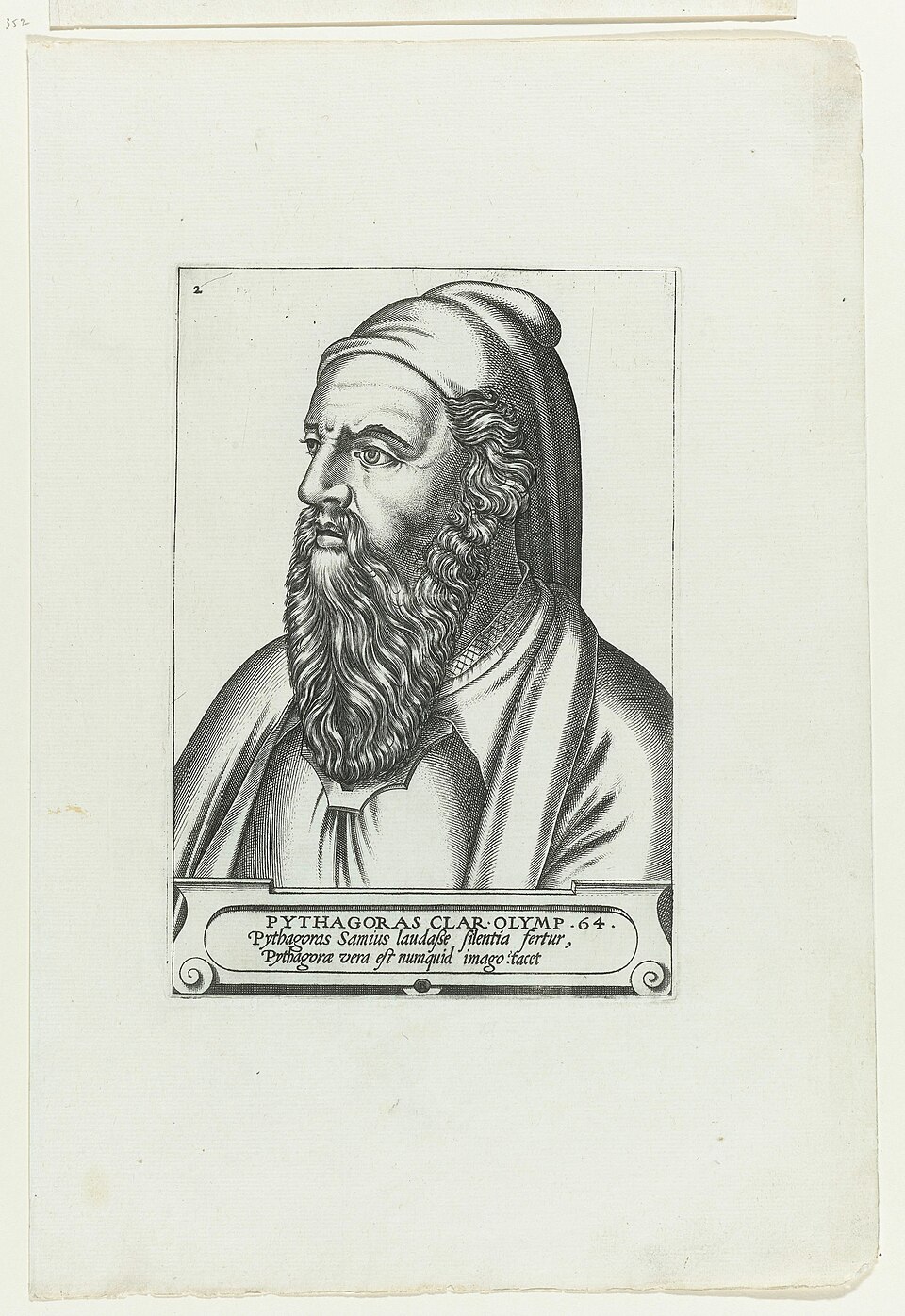
Available translations: English
ἐπὶ δὲ τούτοις Πυθαγόρας τὴν περὶ αὐτὴν φιλοσοφίαν εἰς σχῆμα παιδείας ἐλευθέρου μετέστησεν, ἄνωθεν τὰς ἀρχὰς αὐτῆς ἐπισκοπούμενος καὶ ἀύλως καὶ νοερῶς τὰ θεωρήματα διερευνώμενος, ὃς δὴ καὶ τὴν τῶν ἀνὰ λόγον πραγματείαν καὶ τὴν τῶν κοσμικῶν σχημάτων σύστασιν ἀνεῦρεν. μετὰ δὲ τοῦτον Ἀναξαγόρας ὁ Κλαζομένιος πολλῶν ἐφήψατο τῶν κατὰ γεωμετρίαν καὶ Οἰνοπίδης ὁ Χῖος ὀλίγωι νεώτερος ὢν Ἀναξαγόρου ... ἐφ’ οἷς Ἱπποκράτης ὁ Χῖος, ὁ τὸν τοῦ μηνίσκου τετραγωνισμὸν εὑρών , καὶ Θεόδωρος ὁ Κυρηναῖος ἐγένοντο περὶ γεωμετρίαν ἐπιφανεῖς. πρῶτος γὰρ ὁ Ἱπποκράτης τῶν μνημονευομένων καὶ Στοιχεῖα συνέγραψεν. Πλάτων δ’ ἐπὶ τούτοις γενόμενος ... ἐν δὲ τούτωι τῶι χρόνωι καὶ Λεωδάμας ὁ Θάσιος ἦν καὶ Ἀρχύτας ὁ Ταραντῖνος καὶ Θεαίτητος ὁ Ἀθηναῖος, παρ’ ὧν ἐπηυξήθη τὰ θεωρήματα καὶ προῆλθεν εἰς ἐπιστημονικωτέραν σύστασιν.
After these (Thales and Ameristus or Mamercus) Pythagoras transformed the study of geometry into a liberal education, examining the principles of the science from the beginning and probing the theorems in an immaterial and intellectual manner: he it was who discovered the theory of irrationals (or ‘proportions’) and the construction of the cosmic figures.
After him [Pythagoras] Anaxagoras of Clazomenae dealt with many questions in geometry, and so did Oenopides of Chios, who was a little younger than Anaxagoras; … After them came Hippocrates of Chios, the discoverer of the quadrature of the lune, and Theodorus of Cyrene, both of whom became distinguished geometers; Hippocrates indeed was the first of whom it is recorded that he actually compiled Elements. Plato, who came next to them, … At this time too lived Leodamas of Thasos, Archytas of Taras, and Theaetetus of Athens, by whom the number of theorems was increased and a further advance was made towards a more scientific grouping of them.
Thomas L. Heath · A History of Greek Mathematics, vol. I (1921), pp. 141, 170How this fragment survives
- Proclus
Commentary on Euclid’s Elements · S. 65, 15
Citation in a linked historical source record.
These are source citations recorded for this reading or its linked historical source unit. They do not describe the complete manuscript transmission. A supporting record may include a longer passage or a different editorial text.
Original-text edition
Hermann Diels, Die Fragmente der Vorsokratiker, 2nd edition, volume I (Berlin: Weidmann, 1906), chapter 45 B 1, pp. 269–270. Historical Greek running text; later DK chapter numbering is used only as the reader’s index.
Open the historical edition ↗
Notes & source
Two translated portions of the Proclus summary, joined with the same omissions as the Greek dossier. Heath offers “irrationals” with “proportions” as an alternative for the disputed reading. Outer quotation punctuation is normalized; words are preserved
The published translation is preserved. The historical original covers the same ancient passage; differences are noted below.
Removed later DK chapter cross-references and the explanatory sc. gloss; the Proclus passage is present in 1906 chapter 45 B 1. The passage boundaries match Heath; no English change.
No modern translation wording was changed. Bibliographic labels and normalized spacing are not presented as ancient words.
Hermann Diels, Die Fragmente der Vorsokratiker, 2nd edition, volume I (Berlin: Weidmann, 1906), chapter 45 B 1, pp. 269–270. Historical Greek running text; later DK chapter numbering is used only as the reader’s index. View original source ↗
English: Thomas L. Heath · A History of Greek Mathematics, vol. I (1921), pp. 141, 170 Published translation ↗
Additional original-language witness
Hermann Diels, Die Fragmente der Vorsokratiker, 2nd edition, volume I (Berlin: Weidmann, 1906), chapter 45 B 1, pp. 269–270. Historical Greek running text; later DK chapter numbering is used only as the reader’s index.
The published translation is preserved. The historical original covers the same ancient passage; differences are noted below.
Removed later DK chapter cross-references and the explanatory sc. gloss; the Proclus passage is present in 1906 chapter 45 B 1. The passage boundaries match Heath; no English change.
No modern translation wording was changed. Bibliographic labels and normalized spacing are not presented as ancient words.
PROCL. in Euclid. S. 65, 15 Friedl. ἐπὶ δὲ τούτοις Πυθαγόρας τὴν περὶ αὐτὴν φιλοσοφίαν εἰς σχῆμα παιδείας ἐλευθέρου μετέστησεν, ἄνωθεν τὰς ἀρχὰς αὐτῆς ἐπισκοπούμενος καὶ ἀύλως καὶ νοερῶς τὰ θεωρήματα διερευνώμενος, ὃς δὴ καὶ τὴν τῶν ἀνὰ λόγον πραγματείαν καὶ τὴν τῶν κοσμικῶν σχημάτων σύστασιν ἀνεῦρεν. μετὰ δὲ τοῦτον Ἀναξαγόρας ὁ Κλαζομένιος πολλῶν ἐφήψατο τῶν κατὰ γεωμετρίαν καὶ Οἰνοπίδης ὁ Χῖος ὀλίγωι νεώτερος ὢν Ἀναξαγόρου ... ἐφ’ οἷς Ἱπποκράτης ὁ Χῖος, ὁ τὸν τοῦ μηνίσκου τετραγωνισμὸν εὑρών , καὶ Θεόδωρος ὁ Κυρηναῖος ἐγένοντο περὶ γεωμετρίαν ἐπιφανεῖς. πρῶτος γὰρ ὁ Ἱπποκράτης τῶν μνημονευομένων καὶ Στοιχεῖα συνέγραψεν. Πλάτων δ’ ἐπὶ τούτοις γενόμενος ... ἐν δὲ τούτωι τῶι χρόνωι καὶ Λεωδάμας ὁ Θάσιος ἦν καὶ Ἀρχύτας ὁ Ταραντῖνος καὶ Θεαίτητος ὁ Ἀθηναῖος, παρ’ ὧν ἐπηυξήθη τὰ θεωρήματα καὶ προῆλθεν εἰς ἐπιστημονικωτέραν σύστασιν.
Historical original edition: public domain under the recorded term review.
Original edition: Historical original edition: public domain under the recorded term review.
